
The Future of Dental Diagnostics: How AI is Changing the Game
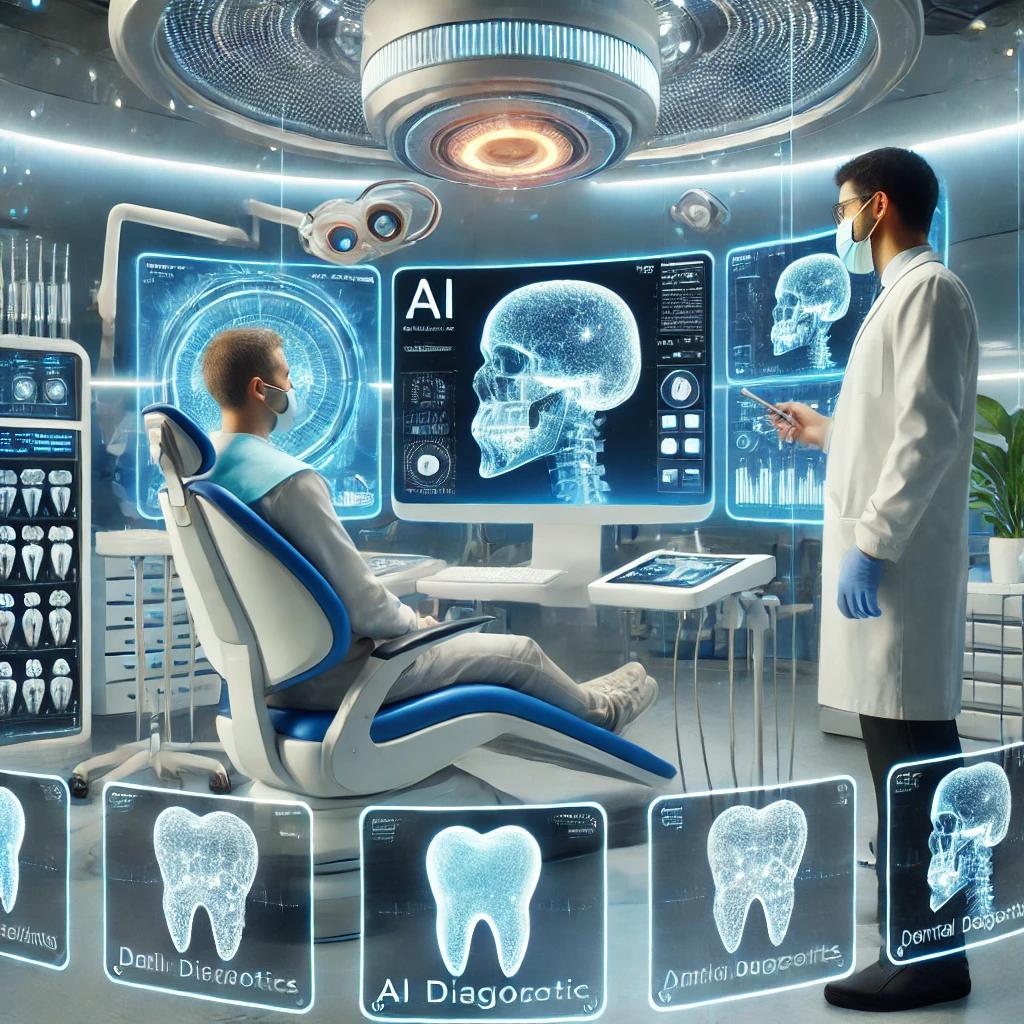
The Future of Dental Diagnostics: How AI is Changing the Game

Artificial intelligence (AI) is rapidly transforming the healthcare landscape, and dentistry is no exception. In the realm of dental diagnostics, AI is ushering in a new era of precision, efficiency, and potentially, earlier interventions. This article explores how AI is revolutionizing the way dentists diagnose dental issues, ultimately aiming to improve patient care.
Traditionally, dental diagnoses have relied heavily on the dentist’s experience and interpretation of X-rays and clinical examinations. While skilled dentists can identify many issues, this subjective approach can introduce variability. AI, on the other hand, offers an objective analysis through machine learning algorithms trained on vast datasets of dental images and patient records.
One of the most significant advantages of AI in dentistry is its ability to analyze dental radiographs with exceptional precision. AI algorithms, particularly convolutional neural networks (CNNs) excel at pattern recognition [2]. They can meticulously examine X-rays and CBCT scans, identifying cavities, bone density changes, and abnormalities that might be challenging for the human eye to detect [4]. This not only expedites the diagnosis process but also ensures that potential problems are not missed, potentially leading to earlier intervention and better long-term outcomes for patients.
The benefits of AI in dental diagnostics extend beyond just accuracy. AI-powered tools can streamline workflows, allowing dentists to dedicate more time to patient interaction and treatment planning. By automating repetitive tasks like image analysis, AI frees up valuable time for dentists to focus on building rapport with patients and developing personalized treatment plans [3].
The future of AI in dentistry is brimming with possibilities. As AI technology continues to evolve, we can expect even more sophisticated applications to emerge. For instance, AI-powered systems might play a role in predicting future dental problems, allowing for preventive measures to be taken before issues arise. Additionally, AI-assisted surgical robots could potentially perform complex dental procedures with unmatched precision, minimizing patient discomfort and recovery time [3].
While AI offers a wealth of exciting advancements, it is crucial to remember that it is a tool, not a replacement for dentists. The human element of dentistry, characterized by a dentist’s expertise, experience, and patient interaction, remains irreplaceable. The future of dental diagnostics lies in a collaborative approach, where AI augments a dentist’s capabilities, leading to a new era of accurate, efficient, and patient-centered dental care.
References:
[2] How AI is Changing the Face of Diagnostics – Dental Products Report (https://www.dentalproductsreport.com/view/how-ai-is-changing-the-face-of-diagnostics)
[3] Revolutionizing Dentistry: How AI Diagnostic Dental Technology is Changing the Game (CranioCatch) (https://www.craniocatch.com/en/)
[4] Shaping the Future of AI Dentistry: Cutting-Edge Insights (CranioCatch) (https://www.craniocatch.com/en/)
Recent post


